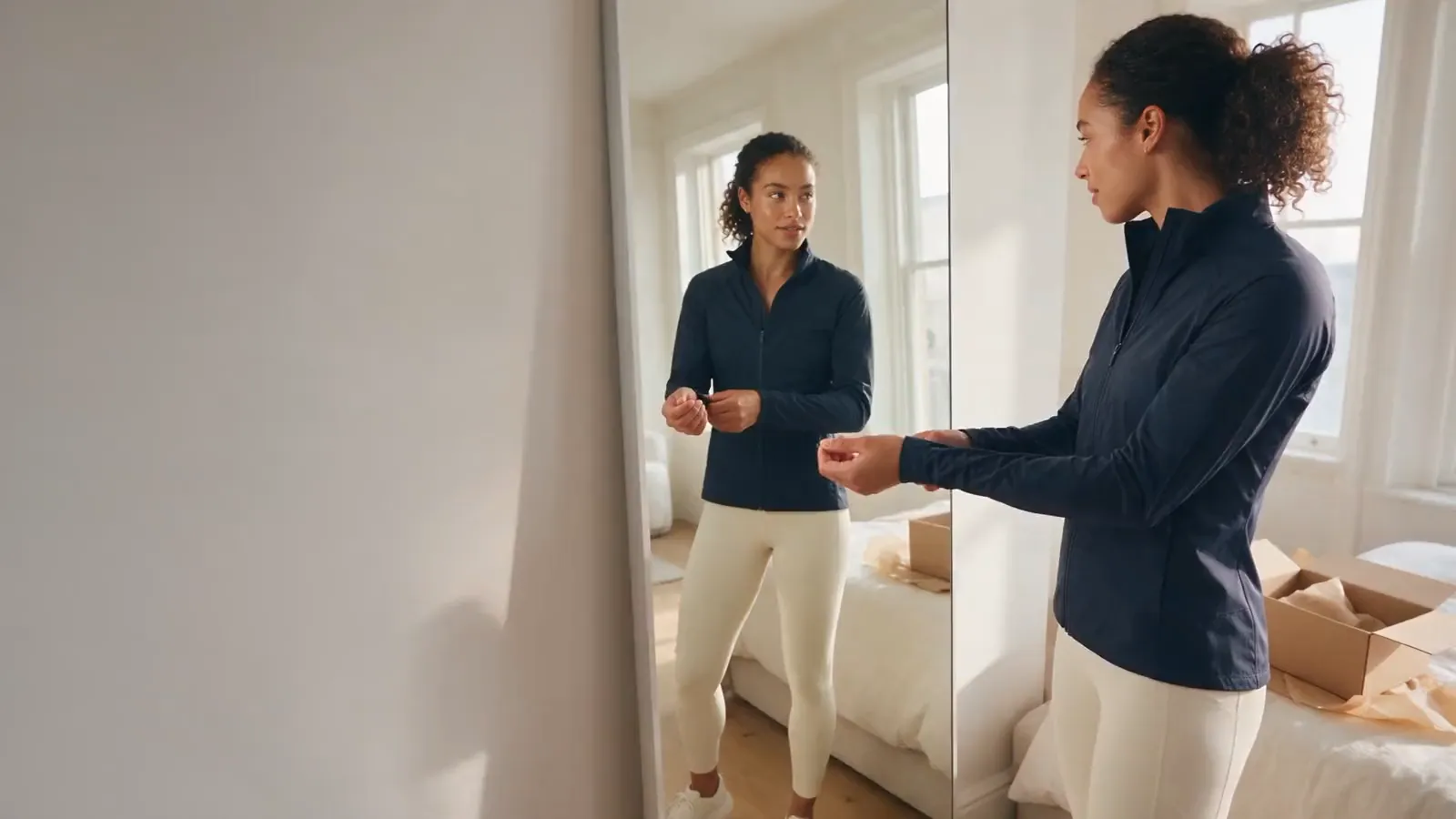
When to keep fitting sessions
To check a new model on a few people before adding it to the range, or for a wearer whose body shape falls outside the supplier's size charts.

Solutions

No photo, no fitting kit travelling from site to site. Each wearer answers a few questions on their phone: their size is calculated in the size chart of every item in their allocation.
It is a way to find each employee's size for every garment in their allocation, remotely, from what they already know about themselves, without measuring them in person or sending them a fitting kit.
The question comes back with every campaign: a new starter to equip, an annual renewal, a change of supplier, a new intake of students before term starts. Workwear, PPE or uniforms: you need one size per wearer and per item before ordering. And every supplier has its own size chart.
Each method has its place. Here is what they cost, how long they take, how reliable they are and what personal data they require.
| Method | Cost | Lead time | Reliability | Personal data |
|---|---|---|---|---|
| Fitting rounds with a travelling kit | High: shipping the kit, travel, team time on every site. | Long: at the pace of the rounds, site by site, absentees to catch up. | Good on the item tried, if every size and the right model are in the kit. | Little data, often written on paper then re-keyed. |
| Measuring with a tape | High: a trained person, a few minutes per wearer, on site. | Long: depends on appointments and sites. | Variable: depends on who measures, then on reading each size chart. | Named body measurements, often kept in shared spreadsheets. |
| Self-declared form: "What is your size?" | Low. | Short, but many reminders. | Low: the size given comes from another brand or another use. | Little data, but scattered files (e-mails, spreadsheets). |
| Body measurements from photos | Software licence, no travel. | Short. | Depends on how the photo is taken: close-fitting clothes, framing, lighting. | Body photos to collect and protect: stronger consent and security requirements. |
| WeeFizz recommendation, no photo needed | Platform subscription, no travel. | A few minutes per wearer; 988 students across 7 campuses in one week. | 95% of recommendations accepted by wearers, size calculated in each item's size chart. | Declared answers only, no photo, EU hosting, GDPR. |
To check a new model on a few people before adding it to the range, or for a wearer whose body shape falls outside the supplier's size charts.
For made-to-measure and alterations: there, a measurement taken by hand remains the reference.
As soon as you need to equip many wearers, across several sites, with several suppliers and on a tight schedule.
 No photo needed
The WeeFizz engine, developed in-house, only asks the wearer what they already know. How the engine works, from body shape to size.
Height, weight, age, gender, then body shape chosen from images. No measurement to enter.
The engine derives 14 girth and length measurements: chest, waist and hip girth, inside leg, arm length…
Each supplier size chart is set up as it is, then calibrated by WeeFizz. The measurements are compared with the item's real size chart.
The wearer sees every garment in their allocation in their recommended size, and approves their order in one go.
Same profile, same result: the calculation is deterministic.
No app to install: a link is enough.
Sent by e-mail, posted in the locker room or handed to a new starter at reception.
Logo, visuals and allocation items: the wearer recognises their company or school.
The wearer answers once and sees their whole allocation in their recommended sizes.
They confirm their items. The manager of their site then approves online.
Measuring is only useful if the size reaches the order without being re-keyed. WeeFizz PRO covers the whole campaign.
WeeFizz does not manage stock, does not place orders with suppliers and does not replace your ERP: it provides reliable sizes and clean quantities. To organise the campaign itself, follow the 6-step method for preparing an allocation campaign.
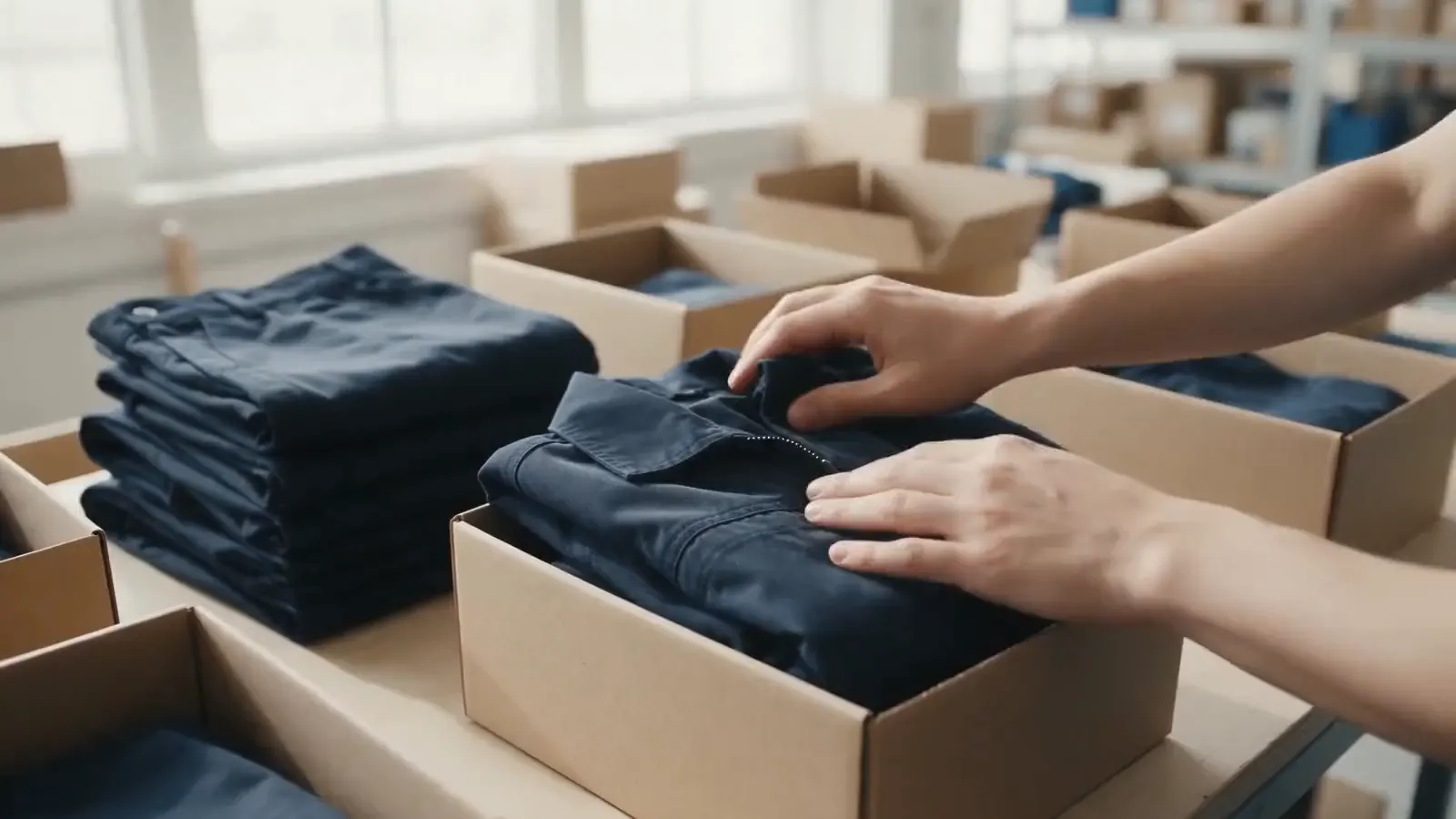
Two jackets labelled "M" by two suppliers do not fit the same person. That is why a size declared by the wearer is not enough.
Excel, CSV, PDF or photo: each supplier's size chart is set up as it is, item by item, then calibrated.
Ease and body-fit variants are set according to the cut. A technical garment, a hi-vis PPE item or a service outfit are not recommended the same way.
An item runs small? Its fit is corrected and the recommendation adjusts straight away for every wearer.
The most common pitfalls are covered in our guide PPE size charts: the most common mistakes, and in how to reduce sizing errors in your PPE allocations.
A school collected the sizes of 988 students across 7 campuses and ordered 3,861 garments, without a single fitting session. The campuses only had to pass on the link.
Read the case: 988 students in one weekFoussier, a personal protective equipment distributor, rolled out WeeFizz across 82 stores. Wearers enter no body measurements, and more than 95% of recommendations are accepted.
Read the Foussier case studyA body photo is sensitive data for an employee. WeeFizz asks for none: the size comes from simple answers.
No photo, no video, no scanner. The recommendation relies only on declared answers.
Data hosted in the European Union, processed in line with GDPR.
Every exchange goes through a secure connection (SSL).
Each manager only sees their own scope. French company, engine developed in-house.
Yes. With WeeFizz PRO, the wearer answers a few questions on their phone or computer: height, weight, age, gender and body shape chosen from images. The engine derives 14 body measurements, then the size in the size chart of each item. Nobody has to travel.
No. WeeFizz size recommendation relies only on declared answers. No photo, no video and no scanner is required, from either the wearer or the company.
Because a declared size comes from another brand, another use or another country. A wearer who says "L" can match two different sizes depending on the supplier. WeeFizz does not ask for a size: it calculates it in the size chart of the item being ordered.
In the field, 95% of recommendations are accepted by wearers. Each supplier size chart is set up as it is, then calibrated, and an item's fit can be corrected if it runs small or large. WeeFizz does not promise zero errors: the recommendation also depends on the quality of the size chart provided.
A wearer answers in a few minutes. The length of a campaign depends mostly on how the link is shared: a school collected the sizes of 988 students across 7 campuses in one week, without a single fitting session.
Answers are hosted in the European Union, processed in line with GDPR and sent over an encrypted connection (SSL). No photo is collected. A campaign can also be run anonymously, without knowing who the wearers are.
No. WeeFizz calculates sizes, has each site approve orders and produces a consolidated export (wearer, site, reference, size, quantity) ready for your ERP. WeeFizz does not manage stock and does not replace your ERP.
Show us your items and your size charts: we'll show you a sizing campaign set up for your sites. Discover WeeFizz PRO.